Does It Snow in Moab, Utah?
Yes, it snows in Moab — but only lightly. The town averages roughly 9 inches of snow a year, almost all of it between December and February, and because Moab sits at about 4,000 feet in the high desert, the snow that falls usually melts within a day or two rather than sticking around. Winter days typically warm into the 40s and low 50s, with overnight lows in the teens and 20s, so a snowy morning often turns into a clear, dry afternoon on the red rock.
How much snow Moab actually gets
Moab’s snowfall is modest and unpredictable. In a typical year the town sees around 9 inches total — about a foot in the heaviest years and just a dusting in the mildest ones. January is the snowiest month, with average highs near 41°F and lows around 17°F. Real accumulating storms are uncommon down in the valley; when snow does fall, the desert sun and dry air clear the roads and slickrock quickly. What you’re far more likely to get in a Moab winter is cold, crisp, sunny weather rather than deep snow.
The mountains are a different story
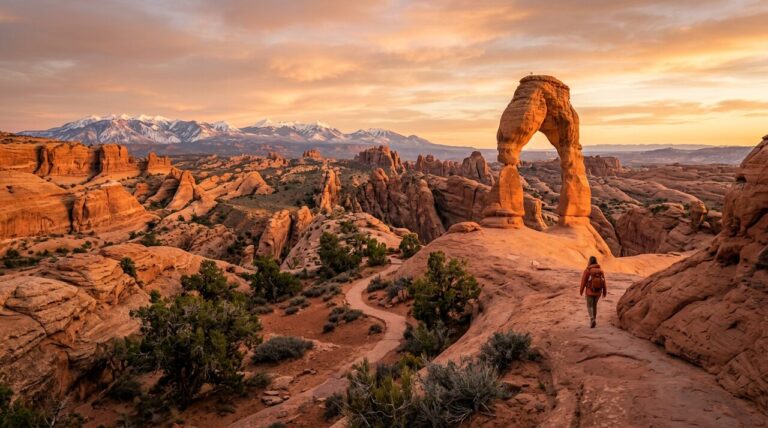
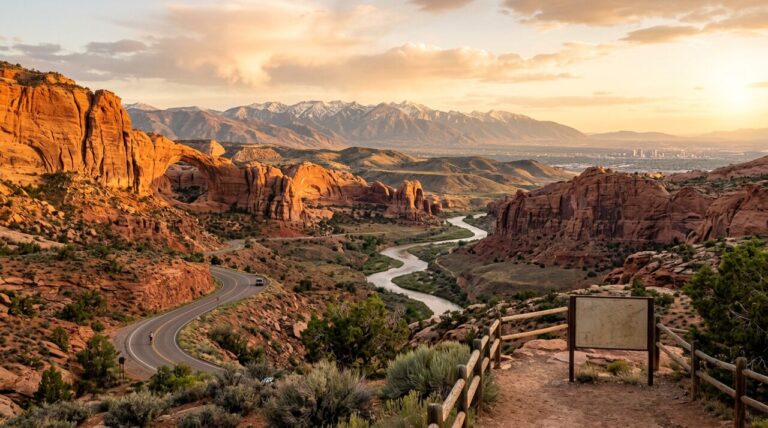
Here’s the split most visitors miss: while the town of Moab barely holds snow, the La Sal Mountains rising just southeast of town are a genuine snow zone. Their peaks top 12,000 feet and hold a deep snowpack all winter, which is why you can stand among red sandstone arches on a warm afternoon and see snow-capped peaks on the horizon at the same time. That contrast — red rock in the foreground, white mountains behind — is one of the most striking views in the Southwest and a big reason winter photographers love Moab.
What most people get wrong
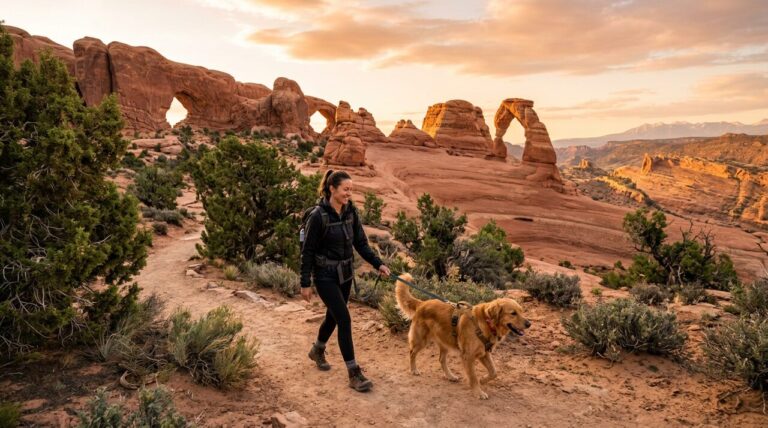
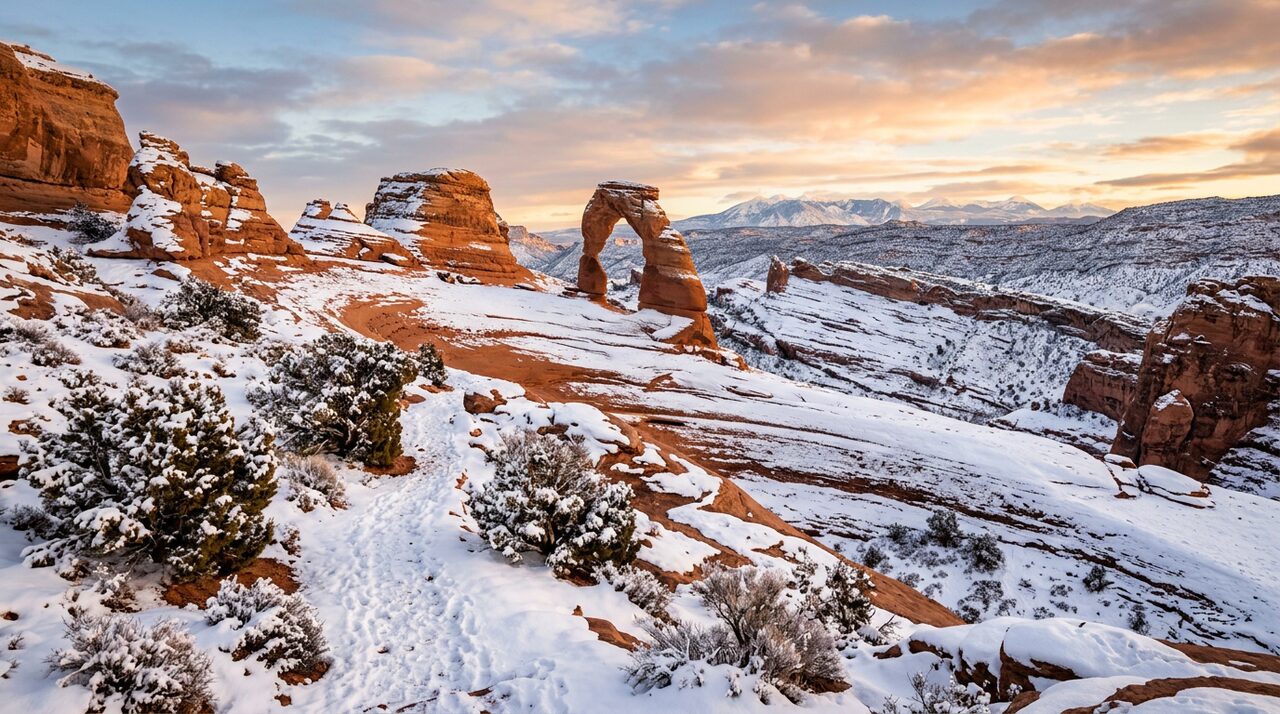
The common mistake is assuming Moab “shuts down” or gets buried in snow for the winter, the way a mountain ski town does. It doesn’t. Arches and Canyonlands stay open year-round, the trails are usually clear, and winter is arguably the best time to hike Delicate Arch without crowds or summer’s brutal 100°F heat. The real winter hazards aren’t deep snow but ice on shaded slickrock and in slot canyons, plus short daylight hours — so trails like Delicate Arch can be slick in the morning even when there’s no snow on the ground. Pack traction and start late enough for the sun to do its work.
Where to stay: Moab is the basecamp for both Arches and Canyonlands, and winter is the quietest, cheapest season to book a room near the parks.
Frequently asked questions
What months does it snow in Moab?
Snow is possible from late November through March, but December, January, and February are when it’s most likely. January is the coldest and snowiest month.
Does snow stick around in Moab?
Usually not. At roughly 4,000 feet in the high desert, Moab’s snow typically melts within a day or two as daytime temperatures climb into the 40s and 50s and the dry desert sun clears it fast.
Can you visit Arches and Canyonlands in winter?
Yes. Both parks stay open year-round, winter crowds are thin, and the cool temperatures make hiking far more comfortable than summer. Watch for ice on shaded trails and slickrock.
How cold does Moab get in winter?
Daytime highs are usually in the 40s to low 50s, while overnight lows commonly fall into the teens and 20s. Cold snaps in December and January can drop temperatures lower.
Is there skiing near Moab?
Not at resort scale, but the nearby La Sal Mountains hold deep snow and offer backcountry skiing and snowshoeing for experienced adventurers — a stark contrast to the dry desert floor below.
Keep planning your trip: Best Time to Visit Utah · 7-Day Utah Road Trip