
What to Do in Bryce Canyon
The single best thing to do in Bryce Canyon is hike the Queen’s Garden / Navajo Loop combination — a ~2.9-mile, 1.5–2 hour loop that drops you off the rim and walks you right through the hoodoos, and it’s widely considered the best short hike in any U.S. national park. Beyond that, the must-dos are watching sunrise from the rim, driving the 18-mile scenic road to Rainbow Point, and staying after dark for the stargazing — Bryce is a certified International Dark Sky Park with some of the clearest night skies in the country.
Make it easy: Guided Bryce Canyon hikes, horseback rides among the hoodoos, full-day Bryce + Zion tours, and ranger-style stargazing trips.
Hike down among the hoodoos
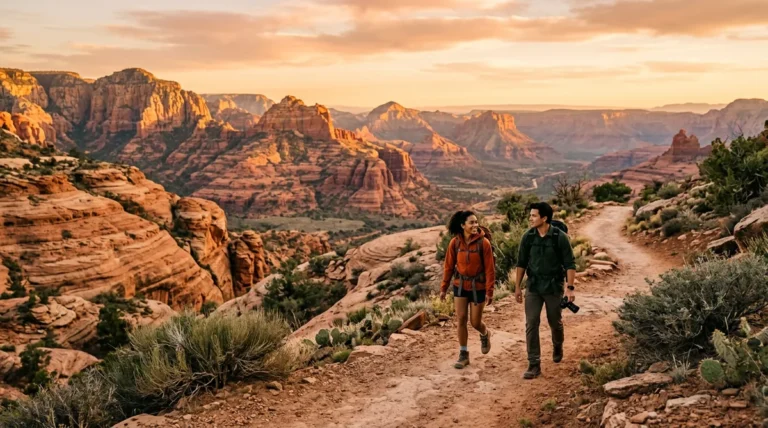
The rim views are spectacular, but Bryce rewards people who actually go down into the amphitheater. The classic route is to descend at Sunset Point on the Navajo Loop, walk the canyon floor, and climb back out through Queen’s Garden to Sunrise Point — about 2.9 miles with roughly 600 feet of elevation change. If you only have time for one thing, this is it. For a longer day, the Peekaboo Loop connects in for a 4.9-mile figure-eight. Note the park sits at 8,000–9,000 feet, so the climb back up the switchbacks feels harder than the mileage suggests.
Catch sunrise (not just sunset) on the Rim Trail
Despite the names, Sunrise Point and Sunset Point are both best at sunrise — the morning light hits the east-facing amphitheater and sets the orange hoodoos on fire. The flat, paved Rim Trail between the two is an easy half-mile stroll and the most accessible big view in the park. Inspiration Point and Bryce Point round out the four main amphitheater overlooks.
Drive the scenic road and stay for the stars
The park’s main road runs 18 miles south to Rainbow Point at 9,115 feet, passing overlooks like Natural Bridge and Agua Canyon. Drive to the end first and work your way back so every stop is a right-hand turn. After dark, Bryce’s elevation and dry desert air make it one of the premier stargazing spots in the U.S. — rangers run astronomy programs and an annual Astronomy Festival, and on a moonless night you can see thousands of stars and the Milky Way with the naked eye.
What most people get wrong: Bryce isn’t a canyon, and a half-day isn’t enough
Two common mistakes. First, Bryce Canyon technically isn’t a canyon at all — it’s a series of natural amphitheaters carved by frost-wedging and erosion, not by a river, which is why the hoodoos look the way they do. Second, people treat it as a quick photo stop between Zion and the next park and give it 90 minutes on the rim. To actually experience Bryce you need to get below the rim, even for one short loop — the hoodoos are far more dramatic standing among them than looking down at them.
Frequently asked questions
What is the must-do hike in Bryce Canyon?
The Queen’s Garden / Navajo Loop combination — about 2.9 miles, 1.5–2 hours — which takes you down off the rim and through the hoodoos. It’s the most popular hike in the park and one of the best short hikes in the national park system.
How much time do you need at Bryce Canyon?
Half a day covers the highlights (one rim sunrise plus the Queen’s Garden/Navajo loop). A full day lets you add the scenic drive to Rainbow Point and an evening of stargazing.
Can you do Bryce Canyon without hiking?
Yes. The Rim Trail between Sunrise and Sunset Points is flat and paved, and the 18-mile scenic drive reaches every major overlook by car, so you can see the best of Bryce without going below the rim.
Is Bryce Canyon good for kids?
Very — the short loops, horseback rides, junior ranger program, and dramatic but walkable rim trail make it one of the more family-friendly Utah parks.
What is there to do in Bryce Canyon in winter?
Snowshoeing and cross-country skiing along the rim. The red hoodoos dusted with snow are a signature winter scene, and the park stays open year-round, though some side roads close after heavy snow.